Something in the Fog They Can't Replicate: Why Modern Horror Games Keep Missing the Point
Every few years, a new horror game arrives promising to capture what Silent Hill did in the late '90s and early 2000s—and every few years, it falls just short in ways that are hard to articulate but impossible to ignore. The problem isn't ambition or budget or even talent. The problem is that the industry keeps studying the wrong parts of the blueprint.
Silent Hill didn't become a cultural landmark because it had good monsters. It became one because it understood something most developers still refuse to sit with: that the scariest place in any horror game is the player's own head. Everything else—the fog, the rust, the radio static, the deliberately clumsy combat—was in service of getting you there.
Modern horror games, by and large, haven't learned that lesson. And the ones that have come closest are instructive precisely because of where they stumble.
The Jump Scare Industrial Complex
Let's start with the obvious. Jump scares are everywhere in contemporary horror gaming, and that's not entirely a sin—used sparingly, they can punctuate tension in satisfying ways. But somewhere along the line, the genre started confusing startle reflexes with dread, and that's a catastrophic misunderstanding.
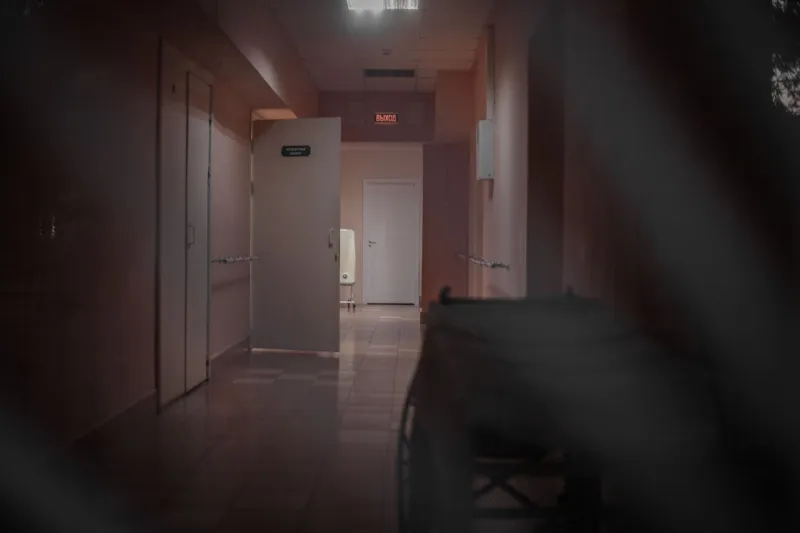
Dread is what Silent Hill specialized in. It's the feeling of walking down a hospital corridor knowing something is wrong before anything has actually happened. It's the radio crackling before you've seen a single enemy. It's the moment you realize the map you've been trusting might not be telling you the whole truth.
Games like Resident Evil Village and The Callisto Protocol—both competent, visually impressive releases—lean heavily on spectacle and sudden shock. They're good at making you flinch. They're not particularly good at making you dread turning the next corner hours before you actually do it. That slow-burn psychological accumulation, the kind that follows you away from the screen and sits with you while you're trying to sleep, is something Silent Hill achieved almost effortlessly and that most contemporary releases treat as optional.
It isn't optional. It's the whole game.
The Exposition Problem
Silent Hill trusted its players in a way that still feels radical. It handed you fragments—dream sequences, scattered documents, environmental details that contradicted each other—and let you build meaning from the wreckage. The story wasn't delivered to you. You assembled it, and the act of assembly made it personal.
Contrast that with how most modern horror games handle narrative. Alan Wake 2, which earned genuine critical praise and deserved a lot of it, still can't resist over-explaining its own mythology in long expository stretches. Layers of Fear (the 2023 remaster/reimagining) gestures toward psychological ambiguity but keeps nudging you toward the correct emotional interpretation, as if it doesn't quite trust you to feel the right things without guidance.
This is a design philosophy problem, not a writing problem. The writers on these games are often talented. But somewhere in the development pipeline, a decision gets made to clarify, to smooth out the rough edges, to make sure the player understands what's happening. And in horror, understanding is the enemy. The moment you fully comprehend what you're facing, it loses its teeth.
Silent Hill 2's James Sunderland is one of gaming's most enduring protagonists precisely because the game never fully explains him. You understand him emotionally long before you understand him factually, and the gap between those two kinds of understanding is where the horror lives.
Vulnerability as Design, Not Punishment
Here's something the industry has consistently misread about Silent Hill's legacy: the terrible combat wasn't a flaw they worked around. It was a load-bearing wall.
When you fight a monster in Silent Hill, you don't feel powerful. You feel desperate. The animations are awkward, the hit detection is imprecise, and the whole experience communicates one thing clearly—you are not equipped to be here. That mechanical vulnerability bleeds into everything else. It makes the fog feel more threatening. It makes finding a health drink feel like a genuine relief. It makes you want to avoid confrontation, which means the monsters don't need to be constantly present to be constantly felt.
Now look at something like Dead Space (original or remake)—a game that explicitly cited Silent Hill as an influence and executed its own vision brilliantly. Isaac Clarke is vulnerable in some ways, but he's also a problem-solver, a combatant, someone who can be upgraded into genuine competence. The horror there is visceral and excellently crafted, but it's the horror of a dangerous situation, not the horror of fundamental inadequacy. Those are different emotional registers, and Silent Hill owned the second one in a way nothing else has matched.
Even Amnesia: The Dark Descent, which stripped out combat entirely and forced pure avoidance, ended up creating a different kind of dread—the dread of a prey animal. Silent Hill's dread was more complicated than that. You had weapons. You were just never sure they'd be enough.
What the Indie Scene Gets Right (And Where It Still Falls Short)
It's worth acknowledging that the indie horror space has done more serious work with Silent Hill's actual DNA than most major studios. Games like Signalis, Yuppie Psycho, and Tormented Souls have engaged thoughtfully with psychological horror, narrative ambiguity, and player disempowerment in ways that feel genuinely influenced by the right lessons.
Signalis in particular deserves recognition—it captures something of Silent Hill's emotional texture, the way a place can feel like a mind collapsing from the inside, in ways that most big-budget releases haven't touched. It's not a Silent Hill clone. It's a game that understood what Silent Hill was doing philosophically and then did its own version of that thing.
But even here, the template remains elusive. Most indie horror games that wear Silent Hill's influence on their sleeve eventually reach for a cleaner resolution, a more legible emotional arc, than the source material ever offered. The fog lifts, metaphorically speaking. And when it does, something essential evaporates with it.
The Uncomfortable Truth
Here's what the last twenty-plus years of horror gaming suggest: Silent Hill's design philosophy isn't just hard to replicate. It may be fundamentally at odds with what the contemporary game industry is optimized to produce.
Modern game development—even in the indie space—is structured around feedback, testing, clarity, and player satisfaction metrics. Silent Hill, especially in its Team Silent era, was built around discomfort. Around deliberate wrongness. Around the idea that a player feeling lost and inadequate and vaguely sick was a success condition, not a bug to be patched.
That's a difficult thing to greenlight. It's a difficult thing to market. It's a difficult thing to defend in a focus group when someone says the combat feels bad and you have to explain that yes, that's intentional, the combat feeling bad is the point.
The games that have come closest to Silent Hill's legacy aren't the ones that borrowed its aesthetics or its monsters or its fixed camera angles. They're the ones that were willing to make players feel genuinely, uncomfortably wrong—and then trust that the wrongness was the destination, not the obstacle.
Until the industry figures out how to build a pipeline around that idea, the fog isn't going anywhere. And honestly? Neither is the gap.