For Sale, As-Is: Silent Hill's Dead Businesses and the America They Buried
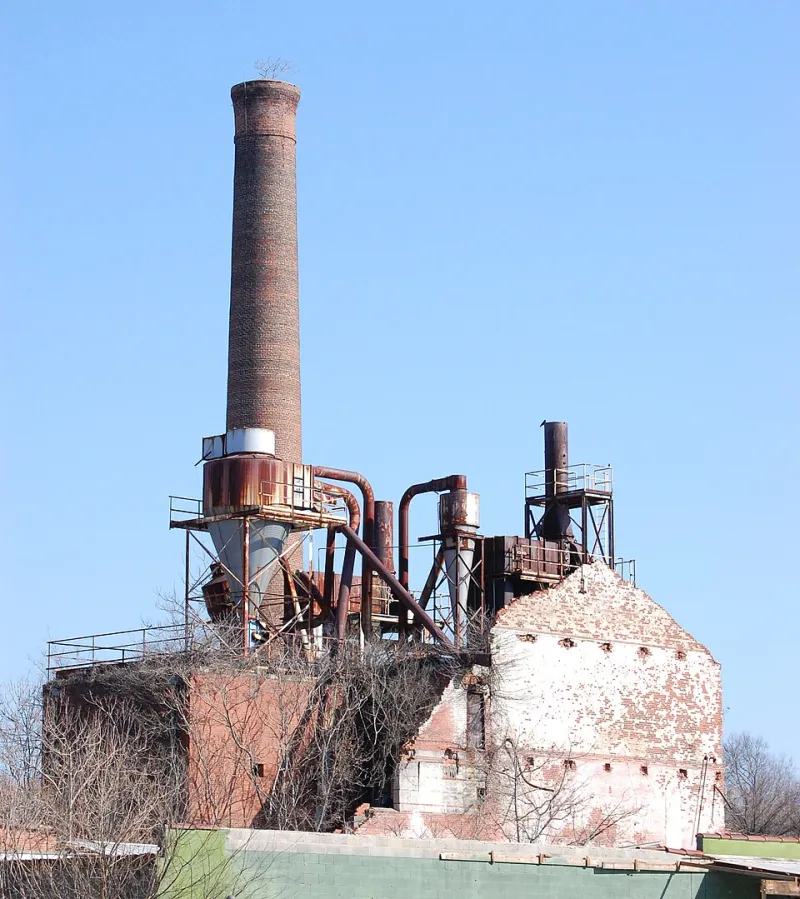
Photo: Dennis Brown, CC BY-SA 3.0, via Wikimedia Commons
Walk down the main drag of any Silent Hill game and you'll pass a shoe repair shop, a diner, a bowling alley, a hardware store. No chains. No franchise logos. Just the commercial skeleton of a town that peaked sometime around 1975 and never got the memo.
Most players read these spaces as set dressing — atmospheric backdrops between monster encounters. But there's a reason American players feel a cold pinch of recognition walking past that abandoned diner. We've all driven through the real version.
The Town That Time Forgot Was Ours
Silent Hill's visual DNA is pure Rust Belt and rural America: the kinds of towns that dot Route 9 in New Jersey, the fading mill towns of Pennsylvania, the stretches of Ohio and Michigan where the plant closed and Main Street followed. The games never name-drop deindustrialization, but the evidence is everywhere. Motels with vacancy signs that haven't lit up in decades. Gas stations with hand-painted prices. Schools and businesses sized for a population that simply isn't there anymore.
This isn't an accident. The original development team studied American photography and film — the washed-out blues and grays of the first game owe as much to a certain kind of melancholy road-trip Americana as to any horror tradition. They understood something that took US audiences longer to articulate: an empty business district is scarier than a haunted house, because it implies a whole town's worth of reasons for the emptiness.
Commerce as Crime Scene
What makes the franchise's frozen commerce so effective is the specificity. In Silent Hill 2, you find a bowling alley where the shoes are still racked. In Silent Hill 3's mall sections, the stores are stocked and shuttered at once, as if everyone stepped out mid-purchase. These aren't ruins of the ancient past. They're ruins of recent life — the commercial equivalent of a body still warm.
That's the trick. A castle dungeon tells you nothing about your own world. A closed-down diner with coffee cups still on the tables tells you everything. Someone worked here. Someone drove thirty minutes for the early-bird special here. The town's supernatural horror gets the headlines, but its economic horror is what makes your stomach turn, because it isn't supernatural at all. It's just what happens when the highway gets rerouted or the factory moves overseas.
A Eulogy Disguised as a Horror Game
Here's the argument that matters: Silent Hill is a eulogy for a specific version of America — the version where a town could sustain itself, where Main Street meant something, where a kid could grow up and reasonably expect to stay. That America is gone in real life, and the games preserve it the way fog preserves things: pickled, blurred, suspended between states.
The franchise's genius is refusing to explain the abandonment. The fog rolls in, the monsters come, and the businesses stay dead. Nobody in the games ever discusses the town's economy, because the town's economy isn't the mystery — it's the body. The cult, the guilt, the monsters are all distractions from the simpler, sadder truth that places like this die in America all the time, and nobody holds a funeral.
Why It Lands Harder Here
European players see Silent Hill's setting as exotic Americana. US players see their grandparents' hometown. That difference in reception is everything. When an American player walks past the shuttered hardware store and hears the radio hiss, they're not just fearing a monster — they're grieving something they can name. The game weaponizes memory, and specifically American memory: road trips through dying towns, family vacations at lakeside motels that closed the next year, the slow fade of a place you only noticed was gone after it was gone.
That's why the setting resonates more than two decades later, and why no remake has managed to replicate it with modern assets alone. You can render a rusted gas station in 4K. You can't render the national condition that made it meaningful.
The Fog Rolls Over Real Towns Too
Silent Hill endures because it's two horror stories stacked on top of each other. The one on the surface — guilt, punishment, monsters made of sin — gets all the lore videos. The one underneath, about an America that abandoned its own towns, doesn't need a cult to explain it. It just needs a highway sign and a little forgetting.
The shopkeepers of Silent Hill are long gone. But their stores stay open, forever, waiting for customers who died with the town. If that's not the most American horror story ever told, it's at least the quietest.