Fog Spreads: How Silent Hill Permanently Altered the Horror Game Playbook

Photo by Photo by Andy Li on Unsplash on Unsplash
There's a version of horror gaming history where Silent Hill never happens. Where Resident Evil's locked-room survival template stays the dominant model, where horror games are defined by resource management and fixed camera angles, and where psychological dread is something reserved for arthouse movies rather than PlayStation controllers. That version of history is a lot less interesting than the one we actually got.
Because when Silent Hill dropped in 1999, it didn't just offer a different kind of scary. It rewired what the genre thought it was capable of.
What Silent Hill Actually Invented
Before we get into influence, it's worth being precise about what the original Silent Hill games actually pioneered—because the list is longer than most people remember.
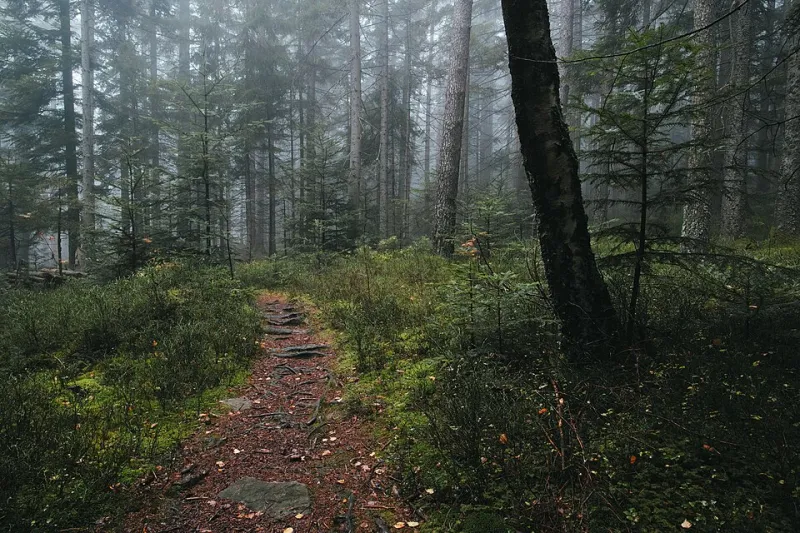
The fog itself was a technical workaround for the PlayStation's draw distance limitations, but Konami's Team Silent turned that constraint into a design philosophy. Limited visibility wasn't just a visual trick; it became a psychological tool. You couldn't see what was coming. You could only hear it. That radio static. That shuffle in the gray. The game made your imagination do most of the heavy lifting, and your imagination is always scarier than whatever a developer can render.
Then there's the monster design. Team Silent famously collaborated with Masahiro Ito, who drew on art history, medical imagery, and surrealist nightmare logic to create creatures that felt like they came from somewhere deeply wrong inside a human mind. These weren't zombies or demons in the traditional sense. They were metaphors with teeth. They meant something. That was new.
And the environments. Silent Hill treated its locations as psychological spaces rather than game levels. The Otherworld wasn't just a visual change—it was a shift in emotional register. The same hospital that felt merely unsettling in the fog became a slaughterhouse of rusted metal and screaming geometry when the darkness descended. The game was teaching players to dread transformation itself.
The Students Who Paid Attention
The influence shows up most clearly in the games that understood what Silent Hill was actually doing beneath the surface.
Amnesia: The Dark Descent (2010) is probably the most direct philosophical descendant. Frictional Games stripped out combat entirely—a move that would have felt radical if Silent Hill hadn't already spent years arguing that weak, clumsy combat was more honest than power fantasy. Amnesia just finished the thought. The monster isn't something you fight. It's something you survive by hiding and hoping. That's pure Silent Hill logic applied to a new context.
Hellblade: Senua's Sacrifice (2017) owes an enormous debt to Silent Hill 2's psychological architecture. Ninja Theory built an entire game around the interior experience of psychosis—a world that reflects and distorts the protagonist's mental state. The monsters aren't real in any conventional sense; they're manifestations of Senua's trauma. If James Sunderland hadn't walked into Pyramid Head's fog first, it's hard to imagine Senua's journey getting greenlit at all.
Even Resident Evil 7, which returned the RE franchise to genuine horror after years of action-game drift, incorporated Silent Hill's domestic intimacy. The Baker house isn't a mansion full of puzzles. It's a home that has gone terribly wrong, and that wrongness is personal and specific in a way that earlier Resident Evil games never attempted.
The Students Who Skipped Class
For every game that absorbed Silent Hill's lessons, there are a dozen that copied its aesthetics without understanding the philosophy underneath.
The mid-2000s and early 2010s were full of horror games that grabbed the surface elements—industrial sound design, flickering lights, pale female ghosts, asylum settings—without grasping why those elements worked. They were collecting ingredients without knowing the recipe. The result was games that felt like Silent Hill cosplay: recognizable but hollow.
The problem usually came down to intent. Silent Hill's disturbing imagery wasn't disturbing for its own sake. Every grotesque detail was doing psychological work. The nurses' blind, head-tilted shuffle wasn't just creepy movement design—it was a manifestation of sexual anxiety and institutional dread. When lesser games imitated that imagery, they got the look without the meaning, and meaning is where the real fear lives.
Jump scare-heavy games represent a particularly clear failure mode. Silent Hill almost never relied on sudden shock. Its horror was slow, cumulative, and deeply personal. Games that replaced that slow burn with cheap startle reflexes weren't making a different kind of horror—they were making a lesser one, and calling it the same thing.
The Mechanic That Changed Everything
If there's one specific Silent Hill innovation that spread furthest through the genre, it might be environmental storytelling as psychological revelation.
Before Silent Hill 2, most horror game environments were atmospheric backdrops. Spooky, sure, but essentially decorative. Silent Hill 2 made the town itself a diagnostic tool. Toluca Prison, the apartment buildings, Brookhaven Hospital—every location was specifically designed to externalize James Sunderland's psychological state. The game's setting wasn't where the story happened. It was the story.
That idea is now foundational to how horror games are designed. SOMA, Layers of Fear, Observer, The Medium—all of them use physical space as psychological map. Players have come to expect that a horror game's environment will tell them something true about the character they're inhabiting, and that expectation was largely created by what Team Silent built in that foggy New England town.
What Gets Lost in the Retelling
Here's the uncomfortable part of tracing this legacy: Silent Hill's influence has been so thoroughly absorbed that many modern players encounter its ideas secondhand, filtered through games that simplified them.
When someone plays a modern psychological horror game and finds it compelling, they may not realize they're experiencing a diluted version of something that hit harder and stranger twenty-five years ago. The original Silent Hill games had a specific kind of wrongness—a refusal to make sense even on their own terms—that most of their successors smoothed out in pursuit of accessibility.
That's not a complaint about modern horror games. Influence always involves translation and transformation. But it's worth sitting with the fact that the most radical version of what Silent Hill was doing—the deliberately broken logic, the unresolved dread, the sense that the game itself might be lying to you—has never quite been replicated.
The fog spread. But something in it thinned out along the way.