The Second Playthrough Problem: Why Understanding Silent Hill Costs You Everything
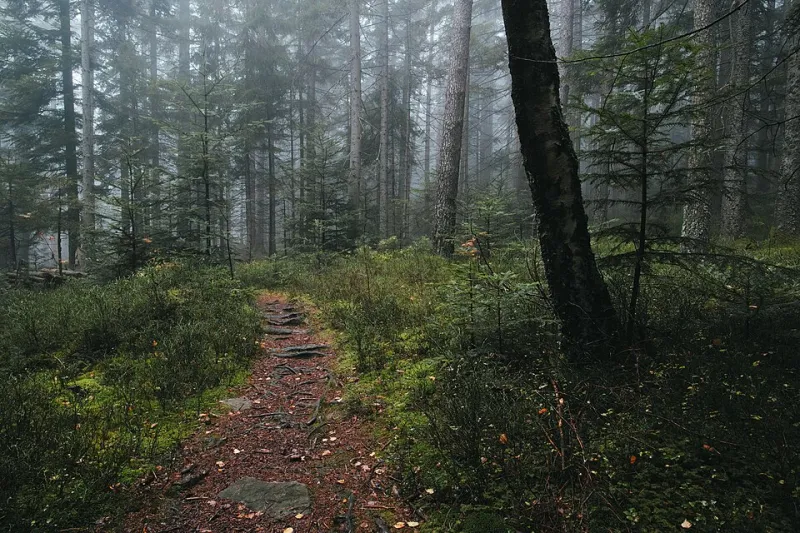
Photo: F R, Public domain, via Wikimedia Commons
The first time you play Silent Hill 2, you don't know what Pyramid Head is. You don't know what he wants, what he represents, or why he keeps appearing in the margins of James Sunderland's journey. You just know that he's there, that he's wrong, and that every time he shows up, something in your chest tightens in a way that's hard to explain to someone who hasn't experienced it.
The second time you play Silent Hill 2, you know exactly what Pyramid Head is. And he's never quite as terrifying again.
This is the central problem that nobody in the Silent Hill community talks about enough. The series was designed—deliberately, brilliantly—to create fear through incomprehension. Once you comprehend it, the architecture of that fear quietly collapses.
What the Fog Was Actually Hiding
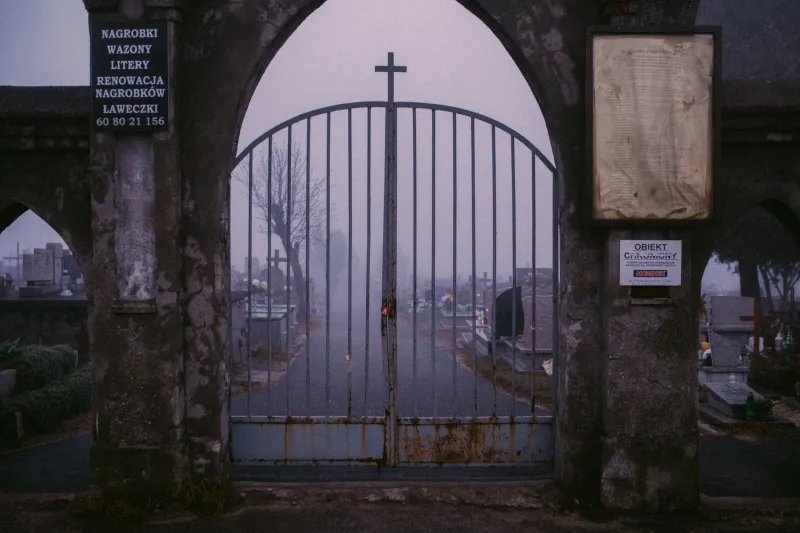
Silent Hill's genius was always about withholding. The fog wasn't just a visual effect; it was a structural metaphor. The game kept information from you—about the town, about the characters, about what was real—and that informational darkness was where the horror lived.
This worked because uncertainty is genuinely frightening in a way that explained threats rarely are. When you don't know what the Otherworld is, it feels like genuine madness, like the world itself has broken rules you didn't know existed. When you understand that it's a psychological manifestation of a character's trauma, it becomes—not uninteresting, but explicable. Explicable things are less scary than inexplicable ones. That's not a flaw in human psychology; it's just how we're wired.
Team Silent understood this. The original games were deliberately cryptic not because the writers couldn't commit to clear answers, but because the ambiguity was load-bearing. The horror required it.
The Wiki Problem
Here's where things get complicated for modern players: the internet happened.
In 1999, if you played Silent Hill and found yourself confused by its symbolism, your options were limited. You could talk to friends. You could buy a strategy guide. You could sit with the confusion and let it work on you. That last option—sitting with it—was, intentionally or not, the correct one. The confusion was part of the experience.
Now, within minutes of booting up any Silent Hill game, a player can access exhaustive lore wikis, YouTube analysis videos, and Reddit threads that have spent fifteen years unpacking every symbol, every reference, every hidden meaning. The cryptic is now comprehensively decoded. And while that documentation represents a genuine achievement of collective fan intelligence, it also represents a kind of spoiler that no content warning can adequately flag.
Knowing that the mannequin enemies in Silent Hill 2 represent James's sexual guilt before you encounter them changes your encounter with them fundamentally. They're still well-designed. They're still unsettling. But they've lost the quality of wrongness that makes them genuinely disturbing, because wrongness requires not-knowing.
Speedrunning the Dread Away
Speedrunning culture presents a related but distinct version of this problem. Silent Hill speedruns are impressive technical achievements—they require precise knowledge of the game's systems, exploitable mechanics, and optimal routing. But watching a Silent Hill speedrun is an almost surreal experience, because the techniques that make speedrunning possible are the exact opposite of the techniques that make the game frightening.
Silent Hill's horror is paced. It builds through repetition, through the accumulation of small wrongnesses, through the slow erosion of the player's certainty about what they're experiencing. A speedrun strips all of that away. What remains is a skeleton—the game's mechanical infrastructure, visible and functional but stripped of the flesh that made it alive.
This isn't a criticism of speedrunners. It's an observation about what kind of game Silent Hill fundamentally is. It's a game that works by slowing you down, disorienting you, and making you feel lost. Any approach that optimizes against those qualities doesn't just make the game shorter—it makes it a different game entirely.
Can Familiarity and Fear Coexist?
The more interesting question isn't whether understanding Silent Hill destroys its horror—it clearly does, at least partially. The more interesting question is whether anything survives that destruction.
The honest answer is: some things do, and they're worth acknowledging.
Silent Hill 2's emotional core—the story of a man who murdered his wife and built an entire psychological architecture around not admitting it to himself—doesn't require mystery to hit hard. Players who know the ending from the moment they start still report feeling the weight of James's guilt, the tragedy of his self-deception, the specific sadness of that final scene at the lake. The game's psychological realism survives understanding in a way that its horror doesn't entirely.
Similarly, the craft of the games—Akira Yamaoka's sound design, the environmental storytelling, the creature designs—can be appreciated and even admired after the mystery is gone. Appreciation isn't terror, but it's not nothing.
The Trap of Complete Understanding
There's a particular kind of Silent Hill fan who has watched every analysis video, read every wiki page, and can tell you exactly what each monster represents and why each location was designed the way it was. This person knows the games deeply and loves them genuinely. They also, almost certainly, cannot be scared by them anymore.
This is the trap the series set without meaning to. The games reward investigation. They're rich enough to sustain years of close reading. The community that grew up around them created an enormous body of interpretive work that is itself genuinely impressive. But the deeper you go into that interpretive work, the more completely you dismantle the specific mechanism that made the games terrifying in the first place.
The first playthrough is the only one you can never get back. The fog is thickest when you don't know the town. Every step after that is a little clearer, a little less lost.
And being lost was always the point.