How Silent Hill Rewrote the Rules Before Anyone Knew There Were Rules
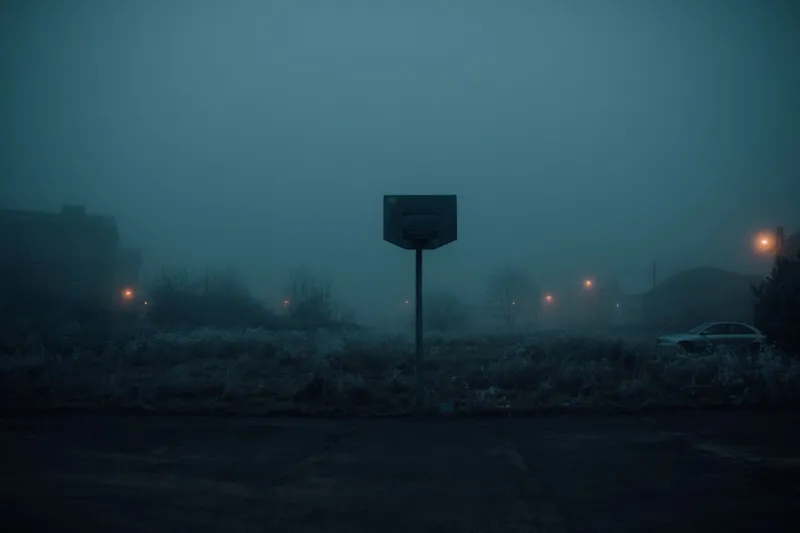
There's a moment in almost every first playthrough of the original Silent Hill where the player stops trying to figure out what's happening and just starts feeling it instead. The fog rolls in, the radio crackles, and the town does something that no amount of exposition will ever fully explain. That moment — that specific surrender — is not an accident. It's the whole design.
Most horror games in the late '90s were still working from a blueprint that prioritized clarity. You knew who the monster was. You knew why it wanted to kill you. The story existed to justify the scares, and the scares existed to keep you moving through the story. Resident Evil, for all its brilliance, was fundamentally a thriller with horror window dressing — there were documents to find, villains to unmask, a conspiracy to unravel. The logic held. The ending made sense.
Silent Hill looked at that model and walked in the opposite direction.
Refusing to Explain Itself
What Keiichiro Toyama and the original Team Silent built wasn't a horror story with ambiguous edges. It was a psychological architecture designed to make ambiguity feel like the only honest response to human suffering. Harry Mason isn't a trained operative or a reluctant hero with a hidden past. He's a dad looking for his kid in a town that seems to be generating nightmares from inside his own head. The monsters aren't explained. The cult's motivations are sketched rather than detailed. The ending — depending on which one you get — raises more questions than it closes.
That refusal to over-explain is what separates Silent Hill from virtually every franchise that came after it. It's not that the games lack lore. Silent Hill 2 alone contains enough psychological subtext to keep a graduate seminar busy for a semester. But the lore never hardens into mythology. It stays soft, interpretable, personal.
Compare that to something like the later entries in the Resident Evil series, or the way the Dead Space franchise eventually felt compelled to explain every detail of the Marker's origin. The more those games explained, the smaller their horror became. Explanation is, almost by definition, the enemy of dread.
The Psychology of Incompleteness
There's actual cognitive science behind why this works. Humans are pattern-recognition machines, and when a pattern refuses to complete itself, the brain doesn't rest — it escalates. Unresolved narrative loops don't just leave us curious; they leave us unsettled in a way that clean resolution never could. Silent Hill understood this before the terminology existed to describe it.
Silent Hill 2 is the clearest example. James Sunderland's story is told almost entirely in implication and environmental suggestion. The game trusts you to feel the weight of what James did without spelling it out until the very last possible moment. And even then, the revelation doesn't close the loop — it opens a deeper one. Why did he really come back? What did the town want from him? The answers the game provides are just sophisticated enough to feel satisfying while leaving the underlying wound wide open.
That's a storytelling technique borrowed less from gaming than from literary fiction — from writers like Shirley Jackson and Flannery O'Connor, who understood that horror lives in the space between what's said and what's meant.
What Everyone Got Wrong When They Tried to Copy It
The influence of Silent Hill on modern horror game design is everywhere and nowhere at the same time. You can see its fingerprints on Amnesia: The Dark Descent, on SOMA, on Layers of Fear, on Alan Wake. Every one of those games borrowed something — the unreliable narrator, the psychological monster design, the emphasis on atmosphere over action. But most of them also made the same mistake: they explained too much.
Alan Wake is a fascinating case study. It has genuine atmosphere, strong character work, and some genuinely unsettling moments. But it also has a mythology that it can't stop talking about. The Dark Presence, the Cauldron Lake, the metafictional layers — by the time the sequels arrive, the mystery has become a system, and systems don't scare you. They just require maintenance.
Silent Hill never built a system. It built a feeling.
The Legacy That Still Doesn't Have a Name
What's striking about Silent Hill's influence is how hard it is to pin down precisely. Developers talk about it constantly in interviews — Hideo Kojima cited it as a primary inspiration for P.T., which may be the closest any game has come to replicating the original formula. But even P.T. eventually became a piece of lore, dissected and documented until every secret was catalogued.
The franchise's real legacy might be less about specific mechanics or narrative techniques and more about a fundamental question it asked of the entire genre: what if horror games trusted their players?
Not trusted them to solve puzzles or survive combat — trusted them to sit with confusion, to carry unanswered questions, to find meaning in ambiguity rather than demand resolution. That's a harder ask than it sounds, especially in an era when games increasingly feel obligated to justify every design decision with explicit in-world logic.
The fog in Silent Hill wasn't just a technical workaround for the PlayStation's draw distance limitations, though it started that way. It became the franchise's defining metaphor. Some things you're not supposed to see clearly. Some truths only reveal themselves when you stop trying to force them into focus.
Twenty-five years later, most horror games are still trying to burn the fog away. Silent Hill knew better than to let them.