Main Street, Population Zero: Real American Towns Doing Their Best Silent Hill Impression
Photo: Richard Green , CC BY-SA 2.0, via Wikimedia Commons
Konami's creators didn't invent Silent Hill out of thin air. The town's gray skies, boarded storefronts, and sense of a community that packed up and left overnight? That's a portrait of Rust Belt America, filtered through Japanese eyes and rendered in PlayStation-era fog. Take a road trip through the right zip codes and you'll swear you've crossed over.
Here are ten real towns that could give the franchise a run for its money — no monsters required, though some nights you'd swear you heard the radio static anyway.
1. Centralia, Pennsylvania
The obvious pick, and honestly the closest thing to a real Silent Hill that exists. A coal seam fire has been burning beneath the town since 1962. The government condemned it, residents drifted away, and the highway over the mine still cracks and vents steam. Graffiti Highway — the cracked, tagged stretch of old Route 61 — was buried in 2020, but the town's empty grid remains. Silent Hill's own backstory of industrial catastrophe swallowing a community is Centralia with a plot.
2. Gary, Indiana
Once a steel powerhouse, Gary has lost more than half its population since 1960. Whole blocks of grand old buildings — the Union Station, City Methodist Church — stand roofless and rotting. Driving its empty boulevards past the skeletal ruins of the Methodist church feels like traversing Silent Hill's downtown after everyone finally left. The steel mills still glow on the horizon, humming like the town's own siren.
3. Cairo, Illinois
At the confluence of the Ohio and Mississippi rivers sits a town that has bled residents for a century. Its downtown is a museum of empty commercial buildings — the historic Safford Memorial Library and the grand old Cairo Custom House among them. Cairo's story, tangled in racial violence and economic collapse, carries the kind of buried history that the franchise always implied was festering under the pavement.
4. Detroit, Michigan
The Michigan Central Station stood abandoned for three decades — a cathedral of neglect visible from the freeway. Add the Packard Plant, the East Side's emptied neighborhoods, and thousands of vacant lots returning to prairie, and Detroit is less a candidate for Silent Hill status and more its capital. The city's rebirth in pockets only sharpens the contrast: lit-up cocktail bars next to blocks where the houses are gone but the fire hydrants remain.
5. Cairo Street, USA — a.k.a. Boley, Oklahoma
Once a thriving all-Black town founded in 1903, Boley's population has fallen below 1,100. Its historic main street, lined with handsome brick buildings, is largely empty — but the town fights on, holding its famous rattlesnake festival every year. There's something profoundly Silent Hill about a place where the community is smaller than the architecture built for it.
6. Shenandoah and the Pennsylvania Coal Towns
The anthracite region of eastern Pennsylvania is a belt of shrinking towns — Shenandoah, Shamokin, Mahanoy City — where breakers stand rusting over stripped-out mountains. Population loss, subsiding ground, and mine fires scattered across the region make the whole corridor feel like Silent Hill's map expanded to county scale.
7. Eastport, Maine
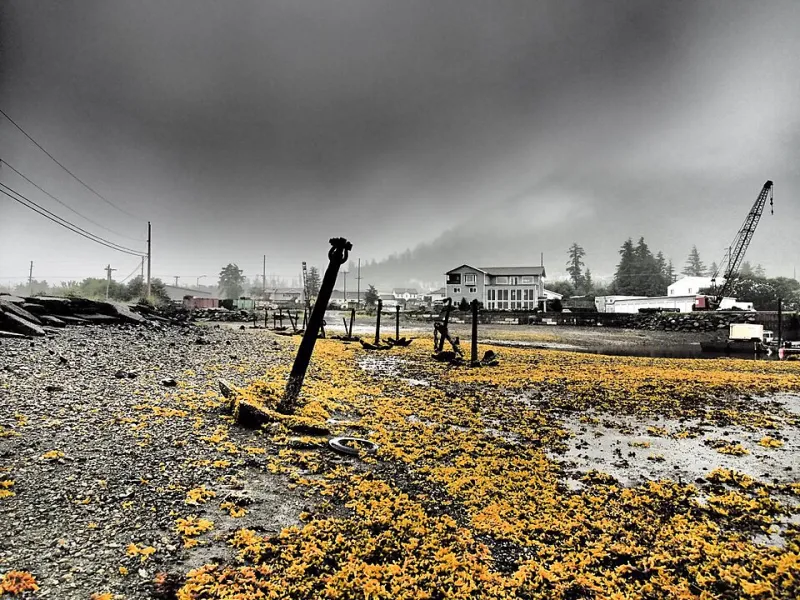
Not every fog town is inland. Eastport, the easternmost city in the US, has watched its sardine canneries close and its population dwindle. Fog rolls off Passamaquoddy Bay and swallows the empty cannery buildings whole. If you want the visual of Silent Hill's waterfront with actual, literal fog, this is your destination.
8. Pine Bluff, Arkansas
Down South, the decay looks different but the math is the same. Pine Bluff has lost nearly a third of its population since 2000, and its downtown is a grid of vacant commercial buildings — movie palace, department stores, hotels — all waiting for a renovation that isn't coming. The town's empty storefronts at dusk have a stillness that radio static would fit perfectly.
9. Timmins to Terraview: the Route 219 Ghost Belt, West Virginia
Drive US Route 19 through southern West Virginia and you pass town after town — Mullens, Welch, Kimball — where the coal jobs left and the buildings stayed. Welch's once-grand downtown, with its Art Deco bank building and hotel, now operates at a fraction of its intended life. The mountains close in, the fog collects in the hollows, and every town feels like a loading screen away from the others.
10. Flint, Michigan
Flint's crisis made national headlines, but the deeper story is architectural: a city built for 200,000 people trying to house 80,000. Blocks of empty lots, the abandoned Water Service Center, a downtown that partially revived while the neighborhoods emptied. Flint is the most direct real-world answer to the question Silent Hill asks: what happens to a town when the industry that built it decides it's done?
The Fog Was Never Fiction
Silent Hill endures because its setting was never fantasy — it was documentary. The games took the material consequences of American deindustrialization and gave them a monster. Visit any of these towns and you'll understand the franchise on a deeper level: the horror was never the thing in the fog. It's the fog itself, and the reason it rolled in.