Mirror, Mirror: How Silent Hill Uses Your Own Face Against You
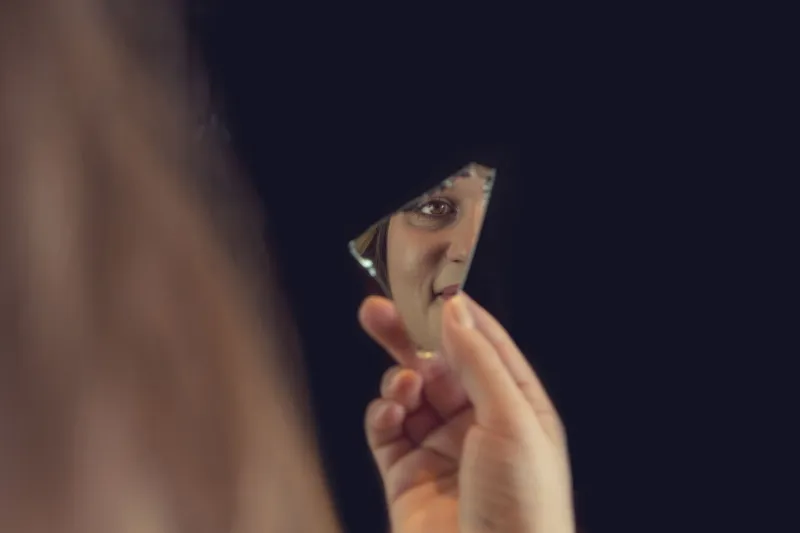
There's a specific kind of dread that doesn't come from something chasing you down a hallway. It comes from catching a glimpse of something that looks like you — moves like you, maybe even sounds like you — and realizing it doesn't need to catch you at all. It just needs to exist.
Silent Hill figured that out early. While the franchise is famous for its fog, its rust-covered Otherworld, and its soundtrack that sounds like a machine having a nervous breakdown, one of its most consistent and underappreciated horror mechanics is mimicry. The games have always been in the business of stealing faces, warping familiar shapes into something wrong, and forcing players to confront the possibility that the self isn't as solid as we'd like to believe.
That's not an accident. It's the whole point.
The Double That Knows Too Much
The most famous example is also the most elegant. In Silent Hill 2, James Sunderland doesn't just fight monsters — he fights a version of himself that the town assembled from his own guilt. Pyramid Head isn't a doppelganger in the literal sense, but he functions like one psychologically. He's the part of James that already knows the truth, executing judgment before James has the nerve to admit what he did. The town didn't invent something alien to terrify James. It reached inside him and pulled out the worst possible version of his own conscience and gave it a knife.
That's a different species of horror than a ghost or a demon. A ghost is other. A guilt-manifestation wearing your own psychology like a coat? That's intimate in a way that's genuinely hard to shake.
Silent Hill 3 pushes it further by making the doubling literal. Heather Mason spends the entire game running from a version of herself she never asked to be — Alessa's legacy, the god-seed, a spiritual identity grafted onto her without consent. The horror isn't just that something wants to possess her body. It's that the claim might be legitimate. Which one is the real person? The girl who grew up with Harry, or the one the Order spent decades manufacturing? The game never fully resolves that question, and the discomfort lingers long after the credits roll.
When the Familiar Goes Wrong
Beyond the big narrative doppelgangers, Silent Hill seeds its environments with smaller, more insidious versions of this mechanic. Nurses that move like human beings until they don't. Mannequins assembled from human limbs that approximate a person without quite becoming one. These creatures sit right in the uncanny valley and camp there, exploiting the way our brains are hardwired to recognize human forms. We're pattern-matching animals, and Silent Hill weaponizes that instinct by giving us patterns that are just slightly off.
The Lying Figures in Silent Hill 2 are a good example. They're wrapped in something that suggests a human silhouette — arms, torso, the rough shape of a person — but contorted into something that makes your skin crawl before your brain fully processes why. The game doesn't need to explain them. Your nervous system does the explaining.
This is horror design working at a neurological level, not just a narrative one.
What We're Actually Scared Of
Here's where it gets interesting from a cultural standpoint. The fear of being replaced, of having your identity stolen or hollowed out and worn by something else, isn't abstract. It maps directly onto anxieties that feel extremely current.
We live in an era where the performance of identity has become its own industry. Social media profiles are curated selves, constructed and maintained with real effort. Deepfakes can put your face on someone else's actions. AI can mimic your writing style well enough to fool people who know you. The line between the authentic self and the constructed self has never been blurrier, and the cultural anxiety around that blurriness is palpable.
Silent Hill was exploring this territory before most of us had smartphones. The town's mimicry mechanic — its habit of taking something real and producing a corrupted copy — is a horror metaphor for a very modern existential problem. What happens when the copy becomes more convincing than the original? What happens when you can't prove, even to yourself, that you're the real one?
James Sunderland can't prove it. Heather Mason can't prove it. And the games are smart enough to leave that wound open.
Which Games Got It Right
Not every entry in the franchise handles this mechanic with equal skill. Silent Hill 2 and 3 remain the gold standard precisely because the identity horror is structural — it's baked into the story, not just the monster design. The doubling means something. It changes how you understand the protagonist by the end.
Silent Hill: Homecoming gestures at similar territory with Alex Shepherd's fractured sense of self and his relationship to his brother, but the execution is muddier. The mimicry elements feel more like borrowed aesthetic than genuine thematic exploration. The game looks like it understands what it's doing, but the emotional payoff doesn't land with the same weight.
Silent Hill: Shattered Memories deserves credit for a genuinely interesting take. The Harry Mason constructed by that game is, in a meaningful sense, a projection — a version of a person assembled from someone else's grief and memory. The reveal recontextualizes everything, and suddenly the whole game becomes about how we create false selves out of people we've lost. That's identity horror operating at a pretty sophisticated level, even if the game has other weaknesses.
The Silent Hill f announcement has fans cautiously optimistic that a new entry might revisit this territory with fresh eyes. The early imagery suggests a willingness to engage with transformation and lost selfhood in ways that could feel genuinely new.
The Town Knows Your Face
What Silent Hill understands — what it's always understood — is that the most effective horror isn't about the monster. It's about what the monster reveals. A creature that wears your face, that mimics your shape, that claims your history, isn't just scary because it's physically threatening. It's scary because it raises a question you can't easily dismiss: if something else can be you, were you ever really you to begin with?
That's the fog at the center of this franchise. Not the literal gray stuff that keeps the production budget manageable, but the epistemological murk — the uncertainty about who you are and whether the self you walk around with is as solid as it feels.
Silent Hill has been asking that question for over two decades. The fact that it feels more relevant now than ever says something about where we are as a culture. The town always knew. It just had to wait for the rest of us to catch up.