White Noise, Pure Terror: How Silent Hill's Radio Turned Anticipation Into a Weapon
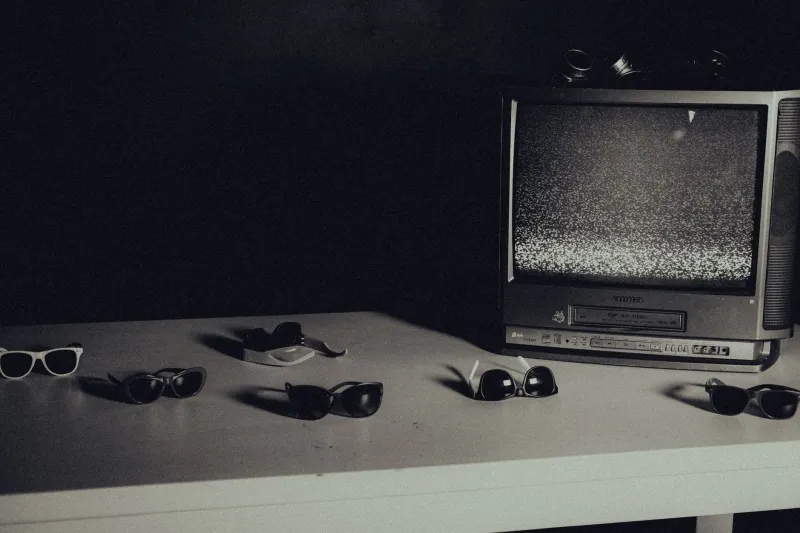
There's a moment every Silent Hill player knows. You're moving through a corridor, flashlight cutting through the dark, and then — before anything happens, before any creature lurches into view — the radio on your hip starts screaming. That burst of crackling static hits like a cold hand on the back of your neck. Your stomach drops. Your pace slows. And somewhere in the fog, something is already waiting for you.
That's not a jump scare. That's conditioning. And it might be the single most effective piece of psychological game design in horror history.
The Mechanic in Plain Terms
For the uninitiated, here's how it works: in Silent Hill, the player's character carries a portable radio. When a monster enters proximity — even before it's visible, even through walls — the radio emits a burst of harsh, distorted static. It's a warning system, technically. In practical terms, it's a terror delivery device.
The genius of it is almost embarrassingly simple on paper. You're not showing the player anything scary. You're telling them something scary is near. The distinction matters enormously. What the brain conjures in the gap between warning and encounter is almost always worse than whatever shambles around the corner. Silent Hill understood this before most horror media did. The radio doesn't reveal the monster — it reveals your own dread.
Pavlov's Flashlight
If you took a psychology class in high school, you probably remember Pavlov's dogs. Ring a bell, give the dog food, repeat enough times, and eventually the bell alone triggers salivation. The dog has been conditioned to respond to a signal rather than the thing the signal represents.
Silent Hill does exactly this to its players, and it does it within the first hour of gameplay.
Every time that static fires off and a monster follows, your nervous system logs the pairing. Static equals danger. Static equals something awful is close. By the time you're deep into the game, the radio doesn't need a monster to follow it up — the sound alone is enough to spike your anxiety. Players have reported pausing the game, setting down the controller, and just breathing after a burst of static, even when nothing appeared. The warning became the weapon.
This is what separates Silent Hill's approach from the jump scare economy that dominates so much of horror gaming. A jump scare startles you once, maybe twice before your brain adjusts and stops buying it. Conditioned dread compounds. It gets worse over time, not better, because every new encounter reinforces the association. The radio is always right. So you learn to fear it absolutely.
Why Modern Horror Games Keep Missing the Point
Since Silent Hill established this template back in 1999, dozens of horror games have tried to implement proximity warning systems of one kind or another. Motion trackers. Heartbeat monitors. Threat indicators on the HUD. Almost none of them land with the same psychological weight, and it's worth asking why.
A big part of it is sensory register. The radio static in Silent Hill is genuinely unpleasant to listen to. It's not a subtle ping or a gentle chime — it's aggressive, intrusive, and impossible to tune out. It demands your attention in the same way a smoke alarm does. Modern games often soften these signals, worried about annoying the player, and in doing so they defang the mechanic entirely. You can't condition someone to fear a sound they're comfortable ignoring.
There's also the question of reliability. The radio in Silent Hill is consistent. It goes off when something is near. It doesn't false-alarm. It doesn't miss. That consistency is what builds the conditioned response — the brain only forms strong associations when the pairing is dependable. Games that introduce unreliable warning systems, or that layer in too many competing audio cues, dilute the effect until it means nothing.
And then there's the silence. One of Silent Hill's most underappreciated design moves is how quiet everything else is. Akira Yamaoka's soundscape is sparse, ambient, and deeply unsettling in its own right — but it gives the static somewhere to land. When everything around you is already whispering dread, a sudden shriek of white noise hits like a thunderclap. In games where the audio mix is constantly busy, warning sounds just become part of the noise.
The Space Between Warning and Arrival
Here's the part that really separates the radio from every horror mechanic that came after it: the gap.
In most horror games, threat and response are nearly simultaneous. Monster appears, you react. The game controls the timing of your fear. Silent Hill hands that timing back to you — and weaponizes it. The radio fires, and then you have to move toward the sound. You have to keep walking down that hallway. You have to open that door. The monster isn't in control of your dread. You are, and you can't stop it.
That forced agency is psychologically brutal in a way passive scares never are. You're not a passenger watching a horror movie. You're the person who has to keep walking anyway, radio screaming, knowing something is there, unable to do anything except meet it. That's closer to real fear than almost anything else games have managed.
A Quarter Century Later
It's been more than twenty-five years since Harry Mason first clipped that radio to his belt and stumbled into the fog. The mechanic has been imitated, referenced, and occasionally outright copied across hundreds of horror titles released since. None of them — not even the strongest entries in the genre — have managed to replicate what that specific combination of sound design, consistency, and forced agency accomplishes.
The radio static works because it respects the player's imagination enough to let it do the heavy lifting. It works because it's unpleasant enough to demand attention. It works because it's honest — it always means something is coming, and it's always right. And it works because Silent Hill understood, at a foundational level, that the worst part of fear isn't the monster.
It's the moment before you see it.
Every time that static kicks on and your gut clenches before your brain has even processed the sound, Silent Hill is still teaching the same lesson it taught a generation of horror fans in 1999. The fog doesn't need to show you what's inside it to terrify you. It just needs to let you know something's there.