The Executioner in the Fog: Why Pyramid Head Is Horror Gaming's Most Psychologically Devastating Creation
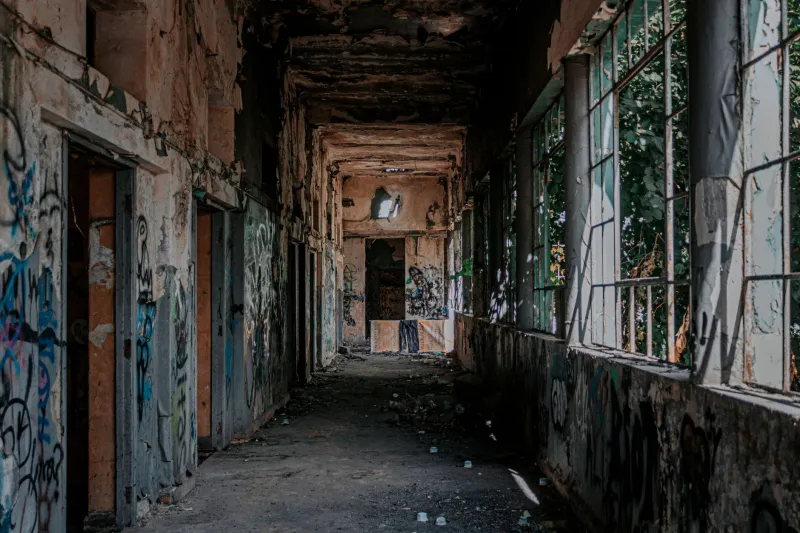
There's a moment early in Silent Hill 2 where you catch a glimpse of something at the end of a hallway. It's huge. It's dragging something behind it. And then it's gone. No attack. No confrontation. Just the slow, grinding scrape of metal disappearing into the dark.
That moment is more terrifying than almost anything else in horror gaming history — and it works because of what Pyramid Head represents, not what he does. He is not a predator hunting you out of hunger or instinct. He is a sentence being carried out. And somewhere in the back of James Sunderland's mind — and yours — there's a quiet, awful suspicion that you've already earned it.
Guilt Given a Body
The genius of Pyramid Head's design starts with intention. Masahiro Ito, the artist who created him, has been pretty open about the fact that Pyramid Head was built specifically for James Sunderland. He is not a universal monster. He is James's monster — a manifestation of the guilt James carries about his wife Mary's death, given physical form by Silent Hill's fog-soaked logic of psychic punishment.
That specificity is what makes him so effective. Most video game monsters are obstacles. Pyramid Head is a verdict.
His visual design reinforces this at every level. The enormous metal pyramid encasing his head — more apparatus than helmet — evokes execution and ceremony simultaneously. He is dressed like a butcher but moves like a judge. The Great Knife he drags behind him doesn't just threaten violence; it announces it, the grinding shriek of metal on concrete functioning as a kind of death knell. You hear him before you see him, and hearing him is already a kind of sentence.
There's also the red, raw flesh visible beneath the pyramid itself — a detail easy to miss but impossible to forget once you've noticed it. He's not armored. He's exposed. Whatever is inside that structure is suffering too. That ambiguity is central to his horror: is he a punisher, or is he also being punished?
The Violence That Made Everyone Uncomfortable — And Why That Was the Point
We can't talk about Pyramid Head without addressing what is probably the most controversial aspect of his design: the implied sexual violence. The scenes involving Pyramid Head and the Mannequin enemies in Silent Hill 2 are disturbing in a way that goes beyond standard horror game content, and they were clearly designed to be.
In the context of James's psychology, this isn't gratuitous — it's diagnostic. James's relationship with Mary was complicated by illness, by resentment, by desires he couldn't reconcile with his role as a caregiver. Pyramid Head externalizes that repressed darkness in the most confrontational way possible. He doesn't just punish James; he embodies the parts of James that James refuses to look at directly.
This is deeply rooted in Japanese horror sensibilities, where the monster is rarely just a monster. In J-horror tradition — think Sadako, think the grudge-spirits of Ju-On — the horror figure is almost always a reflection of unresolved human failure. Pyramid Head fits squarely in that lineage. He is what happens when guilt is left to fester in a place like Silent Hill, which functions less like a haunted town and more like a subconscious given geography.
But Pyramid Head also taps into something distinctly Western: the iconography of judgment and retribution. The executioner's hood, the ritualistic deliberateness of his movement, the sense that he operates according to some terrible law — these resonate with American anxieties about punishment, justice, and whether we actually get what we deserve. In a country where true crime is a cultural obsession and the question of guilt is endlessly relitigated in public discourse, Pyramid Head hits a specific nerve. He doesn't ask if you're guilty. He already knows.
How a Franchise Monster Became a Cultural Icon
Here's the thing about Pyramid Head's cultural reach: it probably shouldn't have happened. He was designed with extreme specificity for one character's psychological arc in one game. Transplanting him to sequels, films, and merchandise should have diluted him into meaninglessness.
And yet.
The 2006 Silent Hill film, for all its mixed reception, understood something important: Pyramid Head is visually iconic enough to carry a scene on presence alone. The film's use of him — as a kind of dark angel rather than James's personal tormentor — strips away the psychological subtext but preserves the image. And that image is genuinely one of the most striking in horror cinema: the enormous blade, the deliberate movement, the absolute absence of hesitation.
His appearances in later games (Silent Hill: Homecoming, the HD Collection rereleases) are more problematic precisely because they try to replicate the psychological function without the psychological context. When Pyramid Head shows up to haunt someone who isn't James Sunderland, he becomes just a big scary monster. He loses the thing that made him extraordinary.
But his broader cultural penetration — the cosplay, the fan art, the merchandise, the endless internet discourse — suggests that even stripped of context, something in his design communicates. People who have never played Silent Hill 2 recognize Pyramid Head. They may not know why he's scary, but they feel that he is. That's rare. That's the kind of visual language that only a handful of horror creations have ever achieved.
What He Leaves Behind
Playing Silent Hill 2 in 2025 — whether through the Bloober Team remake or the original — the thing that still lands hardest about Pyramid Head is the inevitability of him. He doesn't chase you frantically. He walks. He is in no hurry. Because from his perspective, there is no hurry. You're not running away from him. You're just delaying the moment when you stop running.
That feeling — of punishment that cannot be outpaced, only postponed — is something horror as a genre rarely achieves this cleanly. Most horror monsters make you afraid of death. Pyramid Head makes you afraid that death is something you've already earned and just haven't accepted yet.
For a game about grief, guilt, and the stories we tell ourselves to survive our worst choices, that's not just good monster design. That's the whole thesis, walking toward you down a fog-choked hallway, dragging something terrible behind it.
And somewhere in the back of your head, you already know you're not going to run fast enough.