Why Silent Hill's Fog Is the Scariest Thing in Gaming History
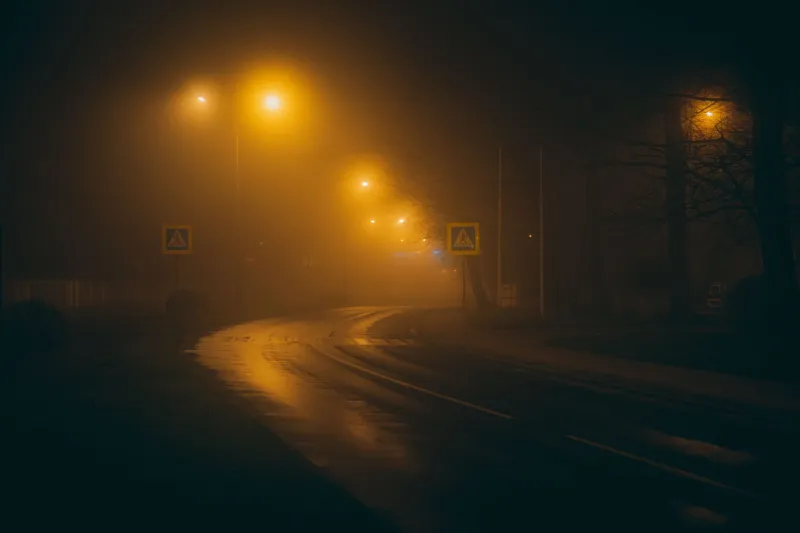
Let's be honest: plenty of horror games throw jump scares at you, crank up the monster count, or drown you in blood-soaked imagery. And yeah, some of those work in the moment. But nothing — nothing — has ever gotten under players' skin quite like walking through the gray, suffocating fog of Silent Hill. It's not just atmosphere. It's a psychological instrument, and Team Silent played it like a concert violinist.
So what's actually going on when that mist rolls in? Why does a visual effect that was originally a hardware limitation become one of the most effective horror tools in gaming? Let's dig in.
The Accidental Genius of a Technical Workaround
Here's a fun piece of gaming history that every Silent Hill fan should know: the fog wasn't born from some grand artistic vision. On the original PlayStation, the hardware couldn't render a full, open-world town without serious pop-in issues — objects appearing out of nowhere as the game loaded them. Team Silent's solution was elegant and, in hindsight, kind of brilliant. They shrouded everything in fog.
What could have been a clunky technical compromise became the franchise's defining visual signature. The fog masked the draw distance, sure, but it also did something far more important: it stripped the player of one of their most fundamental safety mechanisms. In real life, we scan our environment constantly. We look ahead, assess threats, plan escape routes. Silent Hill's fog collapses that horizon to maybe twenty or thirty feet in front of you. Everything beyond that? Unknown. Potentially dangerous. Almost certainly awful.
That's not a game mechanic. That's a primal fear response trigger.
Visibility as a Weapon
Think about how most horror games handle threat. You see the monster. You react. The fear is immediate but also, in a weird way, manageable — because you know what you're dealing with. Silent Hill flips this completely.
In a fog-heavy section of Silent Hill 2, for example, you might hear something shuffling ahead of you before you see it. By the time a Mannequin or a Lying Figure stumbles into your narrow field of vision, your imagination has already been working overtime. Your brain has been filling in that gray void with worst-case scenarios for the past thirty seconds. The actual monster, as disturbing as it is, almost can't compete with what you'd already dreamed up.
This is a well-documented psychological phenomenon. Humans are hardwired to treat uncertainty as a threat. In evolutionary terms, the rustle in the bushes that might be a predator demands more immediate attention than a predator you can clearly see and assess. Silent Hill weaponizes this instinct relentlessly. The fog is perpetual uncertainty. Every step forward is a small act of courage — or desperation.
Sound Design: The Fog's Invisible Partner
You can't talk about the fog without talking about what Akira Yamaoka was doing with the audio. The two elements are inseparable, and together they create something that goes beyond atmosphere into genuine psychological manipulation.
Yamaoka's soundscapes are deliberately disorienting. Industrial clangs, static hiss, distant moaning that might be wind or might be something worse — these sounds don't give you information. They give you noise. And noise in the absence of visual clarity is uniquely destabilizing. Your brain is trying to process two incomplete sensory streams simultaneously, and it can't resolve either one into something safe or familiar.
In the real world, we call this sensory ambiguity, and it's legitimately stressful. Prolonged exposure to environments where you can neither see nor hear clearly is a recognized form of psychological stress. Silent Hill essentially puts you in a controlled version of that environment for hours at a time. It's no wonder people describe feeling exhausted after long play sessions.
Why Other Games Keep Getting It Wrong
Since Silent Hill proved the concept, dozens of horror games have tried to replicate the fog effect. Some have gotten close. Most have missed the point entirely.
The common mistake is treating fog as decoration rather than design. Slapping a gray filter over a level and calling it atmospheric doesn't work if the underlying game design doesn't support it. Silent Hill's fog works because the entire experience is built around uncertainty — the story, the characters, the level layouts, the sound design. Everything reinforces the central feeling of being lost and overwhelmed.
Games like Alan Wake or The Medium — both solid titles in their own right — use atmospheric obscuring techniques, but they tend to funnel players down clear paths with obvious objectives. The fog (or darkness, or spirit world) becomes a visual theme rather than a gameplay philosophy. You're never truly lost. And being truly lost is the whole point.
Even Resident Evil, a franchise with its own legendary horror credentials, operates on a fundamentally different principle. RE gives you maps, item boxes, and save rooms — anchors that let you breathe. Silent Hill gives you a radio that crackles when something's nearby and a town that doesn't make geographic sense. There's no safe harbor. There's just more fog.
The Fog as Metaphor
Here's where it gets really interesting for longtime fans. The fog in Silent Hill isn't just a gameplay mechanic — it's a narrative device. Silent Hill as a place exists in a kind of liminal state, somewhere between the real world and something else entirely. The fog literalizes that in-between quality. You're not fully here, but you're not fully there either. You're suspended in a gray space that belongs to no clear reality.
For characters like James Sunderland in Silent Hill 2, that ambiguity mirrors their internal state. James isn't sure what's real. He's not sure what he remembers. He's not sure who he is anymore. The fog around him is the fog inside him — guilt, grief, and denial made visible. This is environmental storytelling at its most sophisticated, and it's why the franchise still gets discussed in academic game studies circles decades after the original release.
Still Unmatched After All These Years
With Silent Hill 2's remake out in the world and the franchise cautiously returning to the spotlight, it's worth appreciating just how ahead of its time the original design philosophy was. The fog wasn't a gimmick. It was a complete theory of horror — one built on psychology, ambiguity, and the terrifying power of what you can't see.
Other games have bigger budgets, better graphics, and more sophisticated AI. None of them have figured out how to make a weather effect feel like a threat to your sanity. Until they do, Silent Hill stands alone in the fog — right where it belongs.
What's your most memorable fog-related moment from the Silent Hill series? Drop it in the comments below. We want to know what the gray got you.