The Town That Never Lets Go: Why Silent Hill's Story Was Never Meant to Be Finished
We live in a franchise era built on resolution. Marvel wraps its phases. Game series ship lore bibles. Fan wikis are treated like canon documents. The cultural expectation right now is that a story worth caring about is a story that eventually explains itself, ties its threads together, and delivers the satisfaction of completion.
Silent Hill has been aggressively ignoring that expectation since 1999, and somehow it keeps getting more compelling because of it.
Here are the key reasons why the franchise's deliberate narrative incompleteness isn't a bug — it's the whole point.
1. The Town Itself Is Designed to Resist Understanding
Before you can talk about why Silent Hill's story doesn't end, you have to talk about what Silent Hill actually is. And here's the thing: the games give you multiple contradictory answers. It's a place of religious significance. It's a psychological mirror. It's a dimensional overlap. It's a specific geographic location with a specific history. It's all of these things simultaneously, and none of them fully account for everything the games show you.
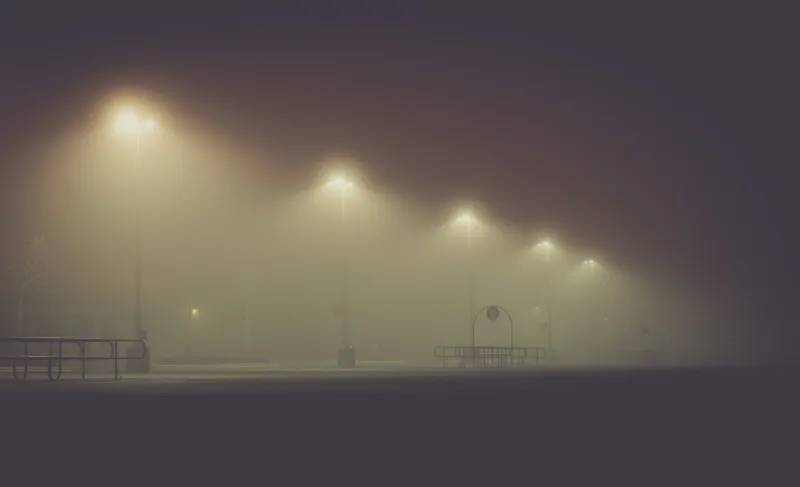
That's not sloppy writing. That's the point. A town that perfectly reflects the inner life of whoever wanders into it can't have a single definitive explanation — because the explanation would have to change based on who's asking. The fog isn't just an aesthetic choice; it's a structural one. You're never supposed to see the whole picture clearly, because the whole picture would be different for every person standing in it.
Once you accept that the setting is fundamentally subjective, unresolvable narrative ambiguity stops being a frustration and starts being an inevitability.
2. Each Game Resets the Mythology Without Invalidating It
One of the most common complaints about Silent Hill's lore is that the games contradict each other. And they do — pretty flagrantly in some cases. The cult mythology shifts. The rules about what the town does and why change between entries. Characters reference events that don't quite line up with what players experienced.
But here's a different way to read that: every game is someone else's Silent Hill. Harry Mason's version of the town operates on different internal logic than James Sunderland's, which operates differently from Heather's, which is different again from the experience in Homecoming or Downpour. The inconsistencies aren't continuity errors so much as evidence that the town genuinely adapts to each individual who enters it.
This actually makes the mythology stronger over time rather than weaker. Each new entry adds another data point without canceling out the previous ones. You're not building a coherent timeline — you're building a portrait of something genuinely unknowable, painted from multiple angles by multiple observers who all saw something slightly different.
3. The Fandom Became the Storyteller
There's a reason Silent Hill fan communities have been actively theorizing for twenty-plus years without running out of material. The gaps in the official narrative aren't empty — they're filled with interpretive possibility, and that possibility is what keeps people engaged long after they've finished the games.
Think about the debates that are still alive right now: Is James Sunderland's ending in Silent Hill 2 meant to be taken literally? What is the actual relationship between the Order's mythology and what the town does independently of human belief? Are the different games happening in parallel realities, sequential timelines, or something else entirely? Is Pyramid Head a universal symbol or something specific to James?
None of these questions have definitive answers. All of them have generated thousands of hours of community discussion, fan fiction, video essays, and creative work. The unfinished story became a collaborative one — and that collaboration has produced some genuinely brilliant interpretive work that enriches the source material rather than replacing it.
4. Closure Would Destroy the Horror
This is the most important point, and it's worth sitting with. Silent Hill is scary because it is fundamentally incomprehensible. The moment you fully understand why the town does what it does, why the monsters are what they are, why the cult operates the way it does — the moment you have a complete map — the horror deflates.
Horror lives in the gap between what you know and what you can't quite reach. H.P. Lovecraft built an entire literary career on this principle, and it's the same principle that makes Silent Hill's fog so effective as a metaphor. You can see shapes moving in it. You can't see what they actually are. That uncertainty is the source of the fear.
If Konami had shipped a canonical lore compendium in 2004 that explained everything — the full history of the town, the complete theology of the Order, the definitive interpretation of what each monster represents — the series would have lost the quality that makes it enduring. The mystery is load-bearing.
5. The Cyclical Structure Mirrors Real Trauma
There's a reason so many Silent Hill games end with their protagonists either destroyed, trapped, or returned to a starting point. The town doesn't offer resolution because trauma doesn't offer resolution — not cleanly, not permanently. It cycles. It resurfaces. It reshapes itself around whatever you thought you'd processed and comes back wearing a new face.
That structural choice — narratives that loop rather than conclude, that leave protagonists in ambiguous states rather than triumphant or definitively defeated — reflects something true about the psychological territory the games are exploring. James Sunderland's story doesn't end with the credits because the thing the story is actually about doesn't work on a three-act structure.
Silent Hill's refusal to finish its own story isn't a franchise management problem or a symptom of development chaos (though there's been plenty of that). It's a design philosophy that treats horror as something that lives in ambiguity, cycles through trauma, and resists the comfort of complete understanding. The town keeps pulling people back — characters, players, fans — because that's what unresolved things do.
Stop waiting for the fog to lift. It's the whole point.