Can't Stay Away: How Silent Hill Weaponizes the Psychology of Compulsion
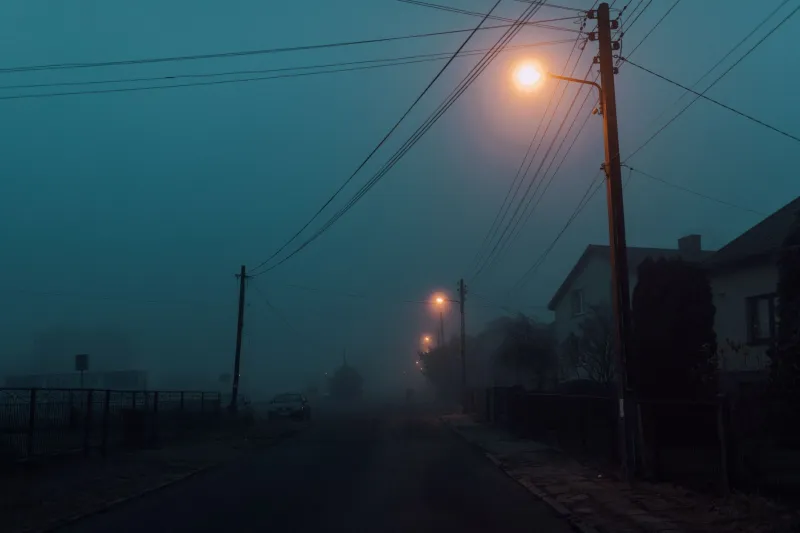
Here's a question that should bother you more than it probably does: why does anyone go back to Silent Hill?
Not in the meta sense of "why did Konami make another sequel." Within the fiction itself, across game after game, characters who have survived the town's particular brand of psychological horror keep getting pulled back into the fog. James Sunderland drives toward it. Heather Mason is practically born running from it and still ends up inside it. Harry Mason spends years trying to piece together what happened the first time. The logic of self-preservation — the most basic human operating system — gets completely overridden. And the series never really frames this as stupidity. It frames it as inevitability.
That framing deserves a closer look, because it maps almost perfectly onto what psychologists and addiction researchers describe when they talk about compulsive behavior.
The Pull Isn't About the Place
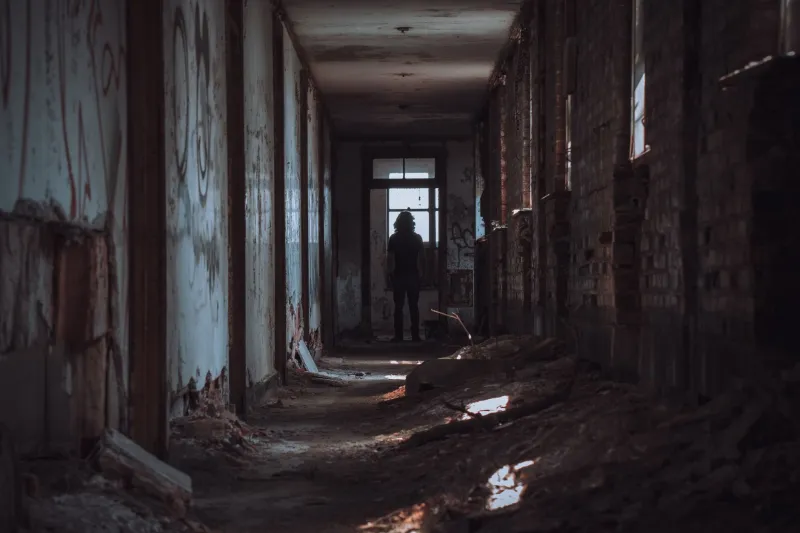
One of the things that makes Silent Hill so distinct from most haunted-location horror is that the town isn't just a setting. It's an externalized psychological state. The Otherworld — that rusted, blood-soaked nightmare dimension the town flips into — isn't random. It's personal. It reshapes itself around whoever is walking through it, pulling imagery from guilt, grief, repressed memory, sexual shame, religious terror. The horror is bespoke.
This is important when you're thinking about compulsion, because addiction researchers make a similar distinction. People don't become addicted to substances in a vacuum — they become addicted to what those substances do for them specifically. The relief, the numbness, the sense of control, the temporary silencing of something painful. The drug is almost incidental. The psychological function it serves is everything.
Silent Hill operates the same way. Characters aren't drawn back to a creepy town. They're drawn back to the one place in the world that actually engages with their specific interior damage. James isn't chasing fog — he's chasing the version of Mary that his guilt has been constructing for three years. The town offers him something no therapist's office ever could: a direct confrontation with the thing he can't stop thinking about. That it's also trying to kill him is almost beside the point.
The Mechanics of the Loop
Look at how the games are actually structured and the compulsion metaphor gets even harder to dismiss. You walk the same streets. You revisit the same landmarks. The geography loops back on itself in ways that feel less like level design and more like the experience of intrusive thought — you keep ending up in the same mental space no matter how deliberately you try to move away from it.
There's a term in cognitive behavioral therapy called "rumination" — the compulsive replaying of distressing memories or scenarios. It's a core feature of depression, PTSD, and anxiety disorders. It's not productive processing. It's the brain stuck in a groove, running the same track because it can't figure out how to move the needle. Silent Hill's geography does this physically. You think you're making progress and then you're back at the elementary school. You think you've found a way out and the road ends at the lake again.
This isn't an accident of game design. The team at Konami's Team Silent was remarkably deliberate about the psychological architecture of these games. The disorientation, the backtracking, the sense that the environment itself is resisting your attempts to achieve closure — all of it mirrors what it actually feels like to be trapped in a compulsive psychological loop.
Why Knowing Doesn't Help
Here's the part that really lands when you think about it through this lens: the characters in Silent Hill frequently know something is wrong with the town. They've been there before. They've read about it. Someone has warned them. And they go anyway.
This is the feature of addiction and compulsion that most confuses people who haven't experienced it from the inside. The assumption from the outside is that knowledge should produce behavior change — if you know the substance is destroying your life, you stop. If you know the town is going to drag you through your worst psychological material, you don't drive toward it in a foggy November. But that's not how compulsion works. Awareness and action exist in different parts of the brain. You can know something completely and still be unable to act on that knowledge.
Silent Hill 2 is almost brutally honest about this. James has clearly spent years constructing an internal narrative that makes his return to the town feel rational — he got a letter, he's looking for his wife, there's a reasonable explanation. The game slowly dismantles that rational scaffolding until what's left underneath is the raw compulsive truth: he came back because he couldn't not. Because the unprocessed thing inside him had enough gravitational pull to override everything else.
Trauma as the Mechanism
What connects Silent Hill's characters across games isn't that they're thrill-seekers or that they're unusually reckless. What connects them is unresolved trauma. And this is where the series functions as something more than just a horror franchise — it's actually modeling a pretty sophisticated understanding of how trauma drives behavior.
Unresolved trauma doesn't stay still. It reaches forward into your life. It shapes your decisions in ways you might not consciously recognize. Psychologists talk about "trauma reenactment" — the way people unconsciously recreate the conditions of their original wound, sometimes as an attempt at mastery, sometimes simply because the nervous system has organized itself around that wound and keeps defaulting to familiar patterns even when those patterns are destructive.
Every protagonist who returns to Silent Hill is, in this reading, engaged in some form of trauma reenactment. The town is the wound made physical. Going back is the nervous system doing what nervous systems do — circling the source of damage, unable to leave it alone, convinced on some level that this time will be different.
What the Fog Is Actually Saying
Silent Hill 3D has spent a lot of time in this fog — analyzing what makes this franchise tick, why it hits differently than other horror games, why it still generates the kind of obsessive community engagement that most games can only dream about. And part of the answer has to be this: the games are about something real.
Not real in the sense of ghosts and monsters being real. Real in the sense that the psychological patterns they depict — the compulsive return, the inability to leave a wound alone, the way trauma reshapes your whole perceptual landscape — are patterns that a huge portion of the audience recognizes from the inside. You don't have to have been to Silent Hill to know what it feels like to keep going back to something that's hurting you.
That recognition is the deepest hook the franchise has. The monsters are terrifying. The atmosphere is unmatched. But the thing that really won't let you go is the uncomfortable sense that you understand exactly why these people keep walking into the fog.
Because sometimes you can't stay away from the thing that's destroying you. And Silent Hill, more than almost any other horror franchise, takes that seriously.